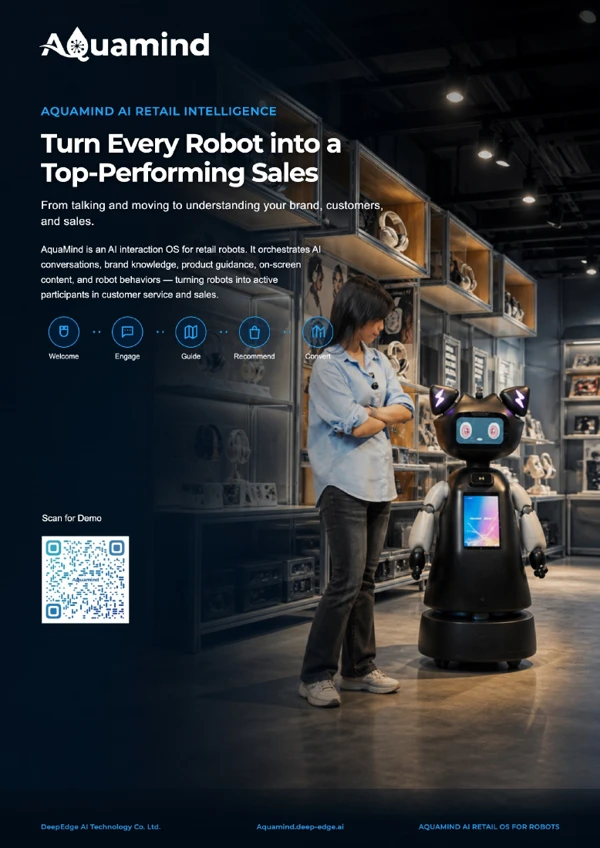
AI retail robots
Discover how AquaMind connects brand knowledge, conversations, product guidance and robot behavior for retail service and sales.
AquaMind combines its configuration platform with integrated hardware solutions to bring your AI agents into the physical world.
Connect cameras, microphones and sensors to understand people, environments and on-site conditions in real time.
Understand intent and context, combine knowledge with memory, and orchestrate the corresponding actions.
Coordinate screens, voice, lights and movement so expression and action stay in sync.
Reuse AquaMind characters and capabilities across different hardware forms.
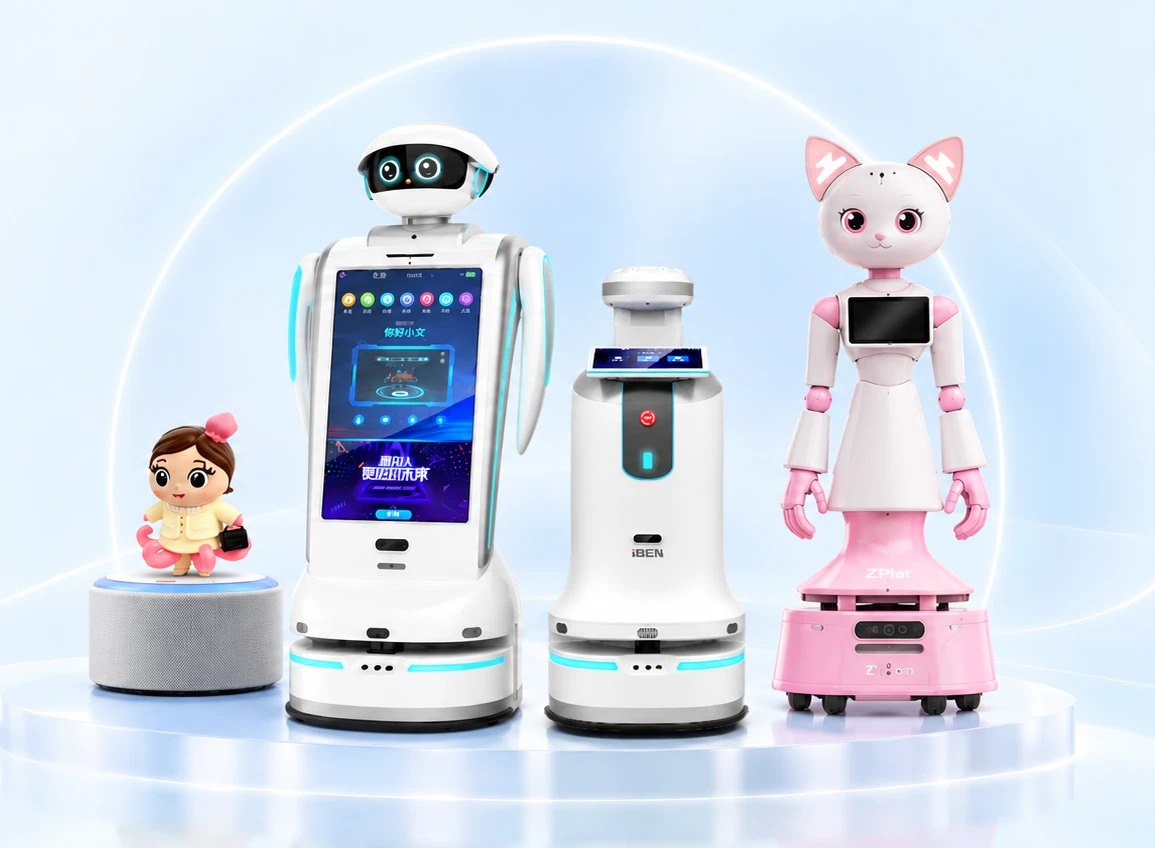
Rather than one generic box, AquaMind can be mapped to different module categories depending on audience, context, and interaction style.
Best-Fit Use Cases
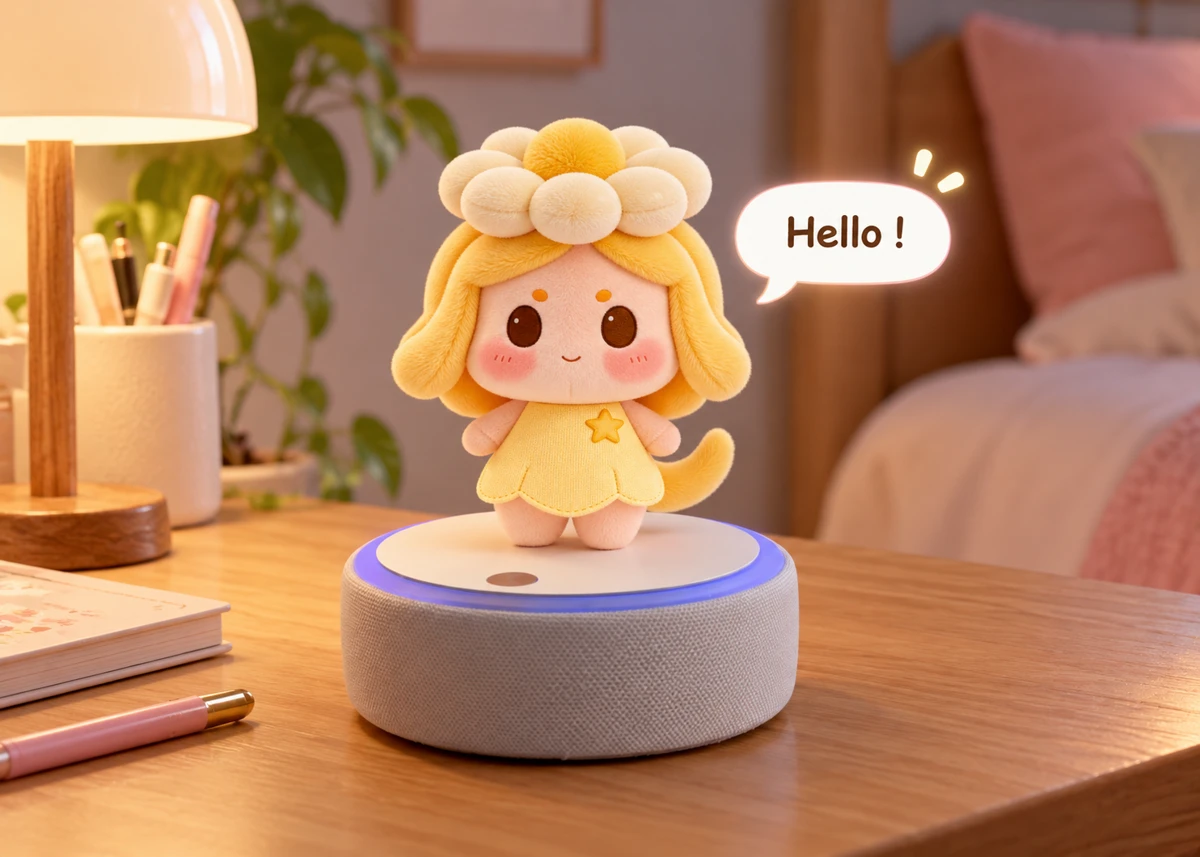
Emotional presence
AquaBox I
A character terminal for warm, memorable everyday interaction. Ideal for mascot experiences built around personality and emotional connection.
AquaMind Layer
Best-Fit Use Cases
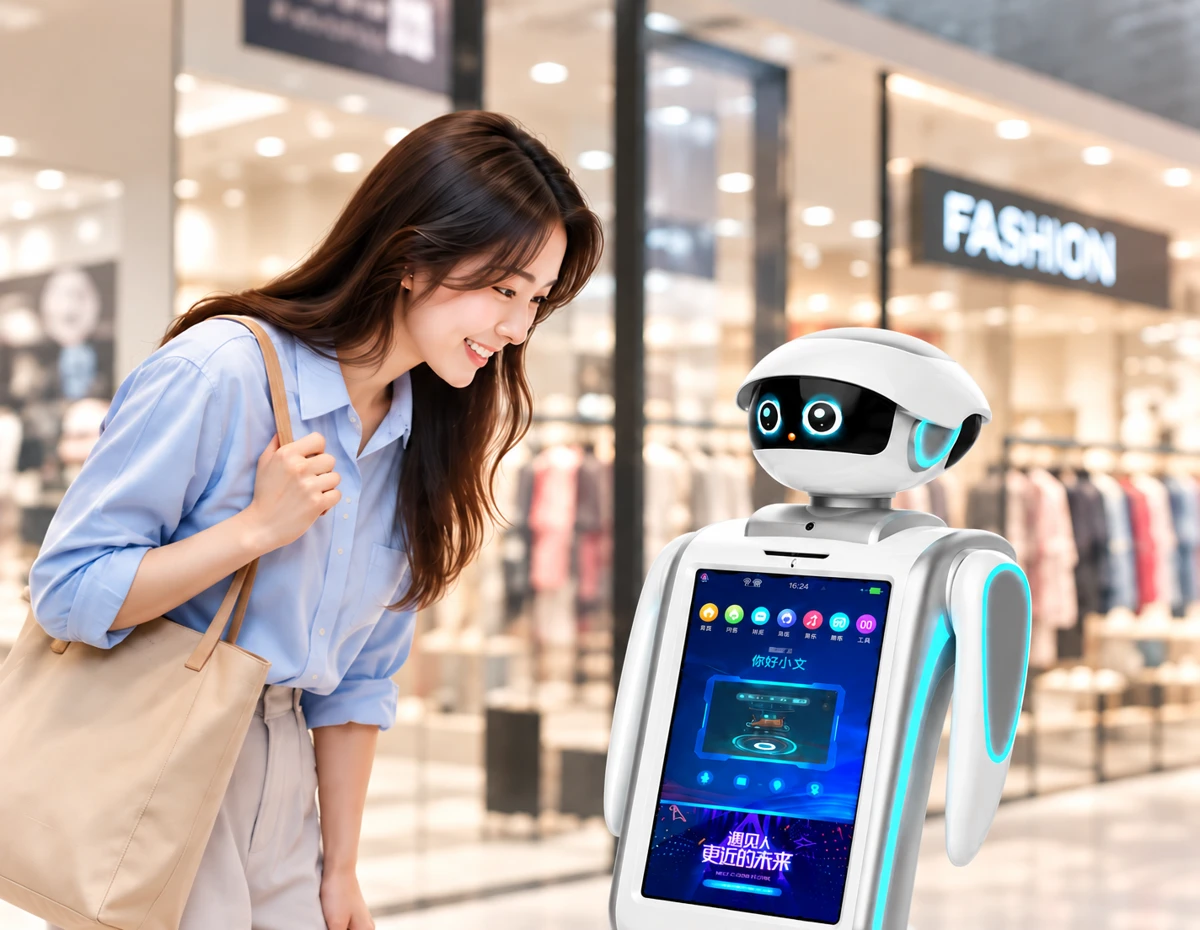
Full-service presence
AquaBox X
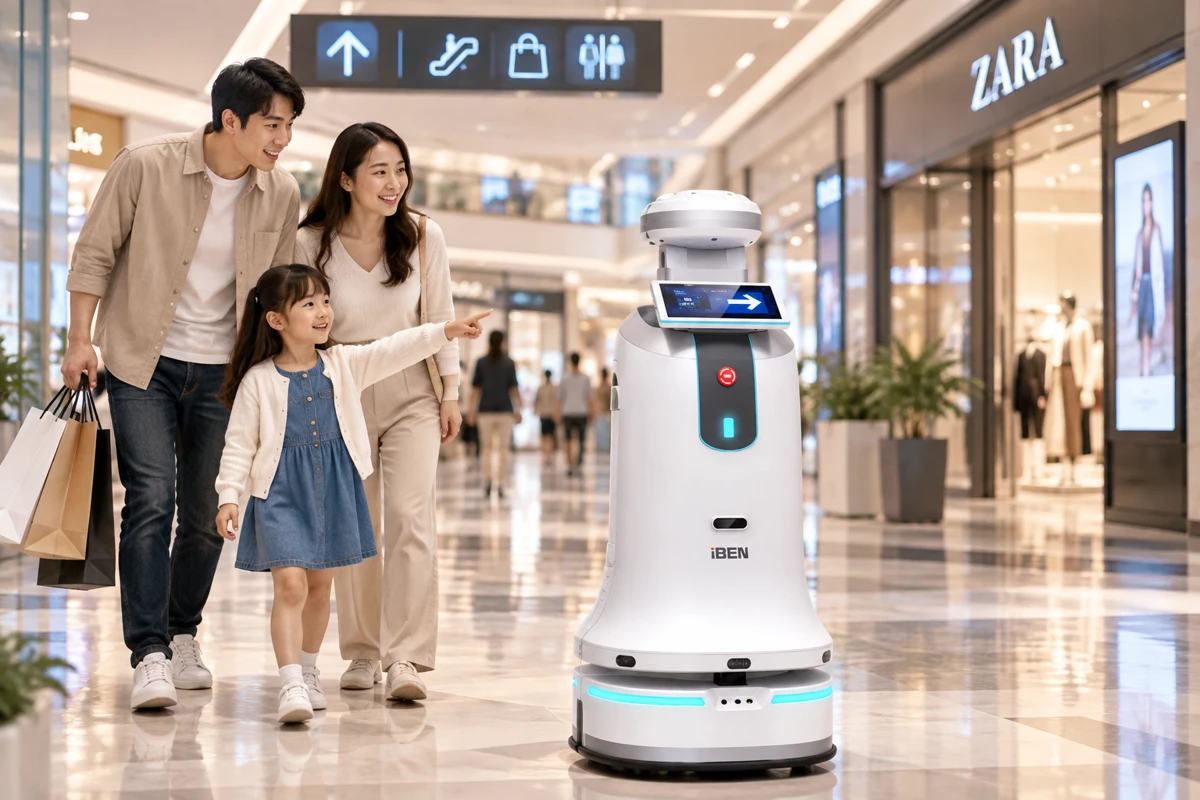
Designed for malls, brand stores and showrooms that need complete service capabilities. Combine mobility, vision, voice and multimedia interaction for enquiries, shopping assistance and wayfinding.
AquaMind Layer
Best-Fit Use Cases
Mobile service
AquaBox R
Designed for malls, exhibition spaces and large stores. Roam autonomously within a designated area and provide enquiries, guidance and information while moving.
AquaMind Layer
The hardware family shares the AquaMind intelligence layer, but each model is tuned for a different physical context, power profile, and deployment shape.
| Model | Type | Use cases | Main interaction | Mobility |
|---|---|---|---|---|
AquaBox I Companion | Companion | Smart toys, desktop companionship, brand IP | Voice, vision, character interaction | — |
AquaBox X Full-service shopping assistant | Full-service shopping assistant | Malls, stores, showrooms | Voice, vision, large screen, multimedia | Navigation, roaming, wayfinding |
AquaBox R Roaming service | Roaming service | Malls, exhibitions, large spaces | Voice, screen, enquiry services | Roaming, obstacle avoidance, designated stops |
Explore our retail robot and brand & IP solutions. Download either brochure in English or Simplified Chinese.
Discover how AquaMind connects brand knowledge, conversations, product guidance and robot behavior for retail service and sales.
NEXT STEP
Tell us about your brand goals, environment and interactions. We’ll help you plan a suitable hardware solution and pilot deployment.